The Two Things Small Businesses Don’t Have: Time and Leverage. Here’s How AI Gives You Both
AI doesn’t replace your judgment—it removes busywork and multiplies your output. Used well, it can give most small businesses back 10–20 hours a week and turn one idea into 10+ assets across channels.
Why “time” and “leverage” are your real constraints
Time is the finite hours you and your team can work.
Leverage is what turns one hour of your effort into many hours of output (templates, automation, repurposing, systems).
AI gives you time by eliminating manual steps, and gives you leverage by turning one good input into many things: drafts, outlines, images, scripts, emails, and posts—consistently, on brand, on repeat.
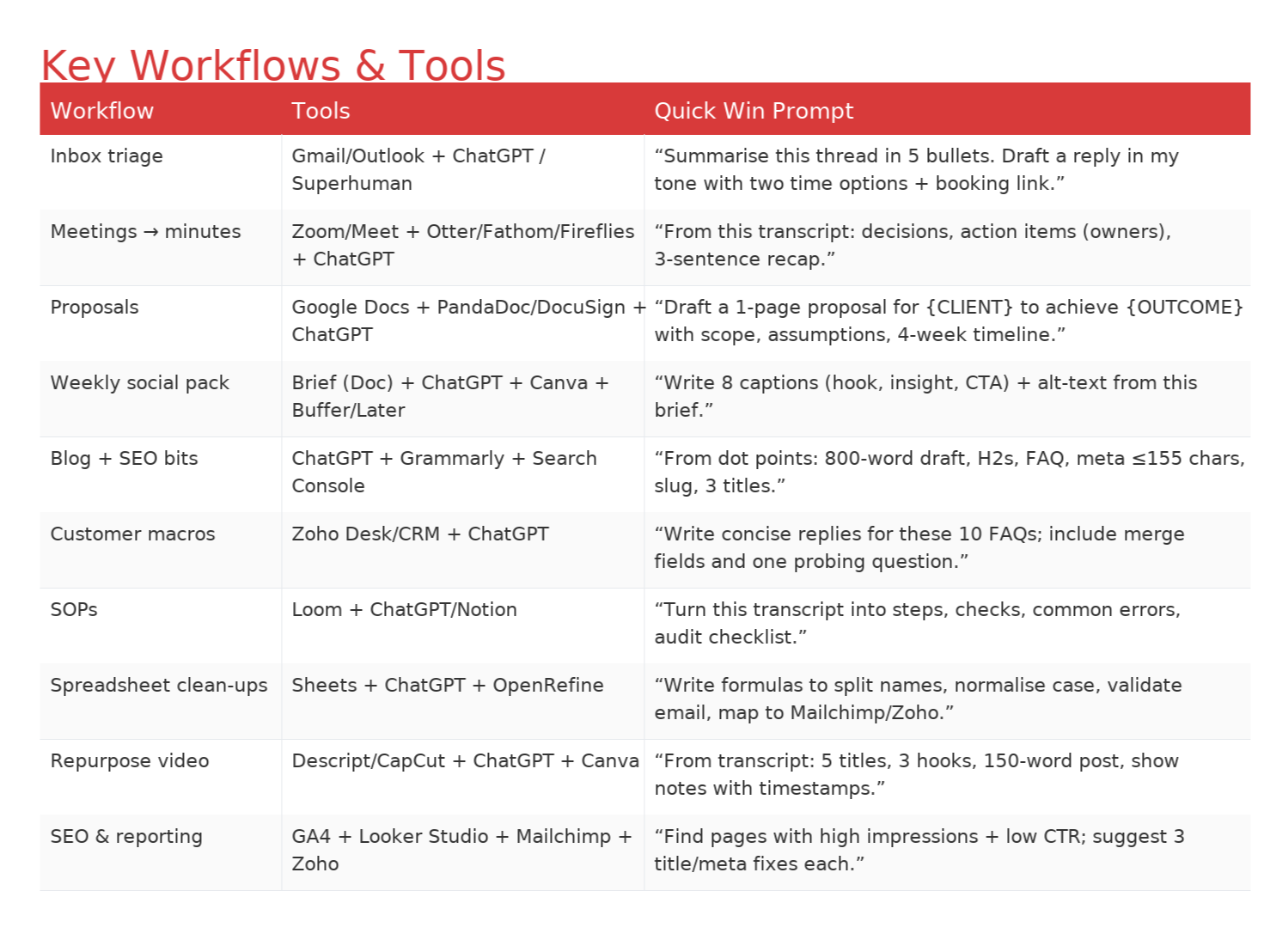
Key Ai tools to give you time back and leverage
What you can leverage with AI (the multiplier effect)
One input → many outputs
Start with a short brief or voice note. Produce: blog draft, email, 5–10 social posts, a LinkedIn article, alt text, and a short video script: same message, multiple formats.Reusable prompt packs & templates
You can save your best prompts as brand-ready templates (tone, audience, offer, CTAs). Next time, swap in the specifics and go.Brand voice memory
Could you teach your assistant your brand voice and proof style once? From then on: consistent tone, structure, and sign-offs—no re-explaining.Evergreen assets, updated on demand
Keep “living” documents (capability deck, pricing FAQs, onboarding email series). AI refreshes them with the latest examples, offers, or seasonal hooks in minutes.Always-on repurposing
Turn any meeting, webinar, or Loom recording into summaries, checklists, playbooks, and social snippets—automatically.Lightweight QA & governance
Set guardrails (no promises you can’t deliver, correct service names, brand words to avoid). AI flags issues before you hit publish.
Simple, concrete examples you can copy today
Lead follow-ups: Paste a prospect’s email + your notes → get a tailored reply with next steps, deadline, and calendar link.
Save: ~10–15 mins per lead.Proposal builder: Feed a short brief (client, outcome, inclusions, exclusions, milestones).
Get a draft proposal with placeholders for scope, assumptions, timeline, and pricing.
Save: 60–90 mins per proposal.Blog in a box: Drop dot-points → receive outline, H1/H2s, 800-word draft, meta description, 3 title options, internal link suggestions, and a square social caption.
Save: 90–120 mins per blog.Customer service macros: Provide your top 20 FAQs + preferred tone.
Get reusable responses with merge fields and “if/then” variants for trickier messages.
Save: 2–3 mins per ticket; scales fast.SOP from a screen recording: Upload a Loom of you doing the task.
Get a clear step-by-step SOP with screenshots, checks, and common errors.
Save: 60 mins per SOP.Ad variant generator: One offer + one angle → 10 headline/description combos, hooks, and UTM-ready CTAs.
Save: 45 mins per campaign.
AI is your time machine and your megaphone. Start with one repeatable workflow this week—proposals or content packs are usually the fastest wins—and bank the hours. Then spend that time on what actually grows the business: better offers, better relationships, better systems.