I Just Spent $30 in Claude Tokens on a Video Script I Didn't Need
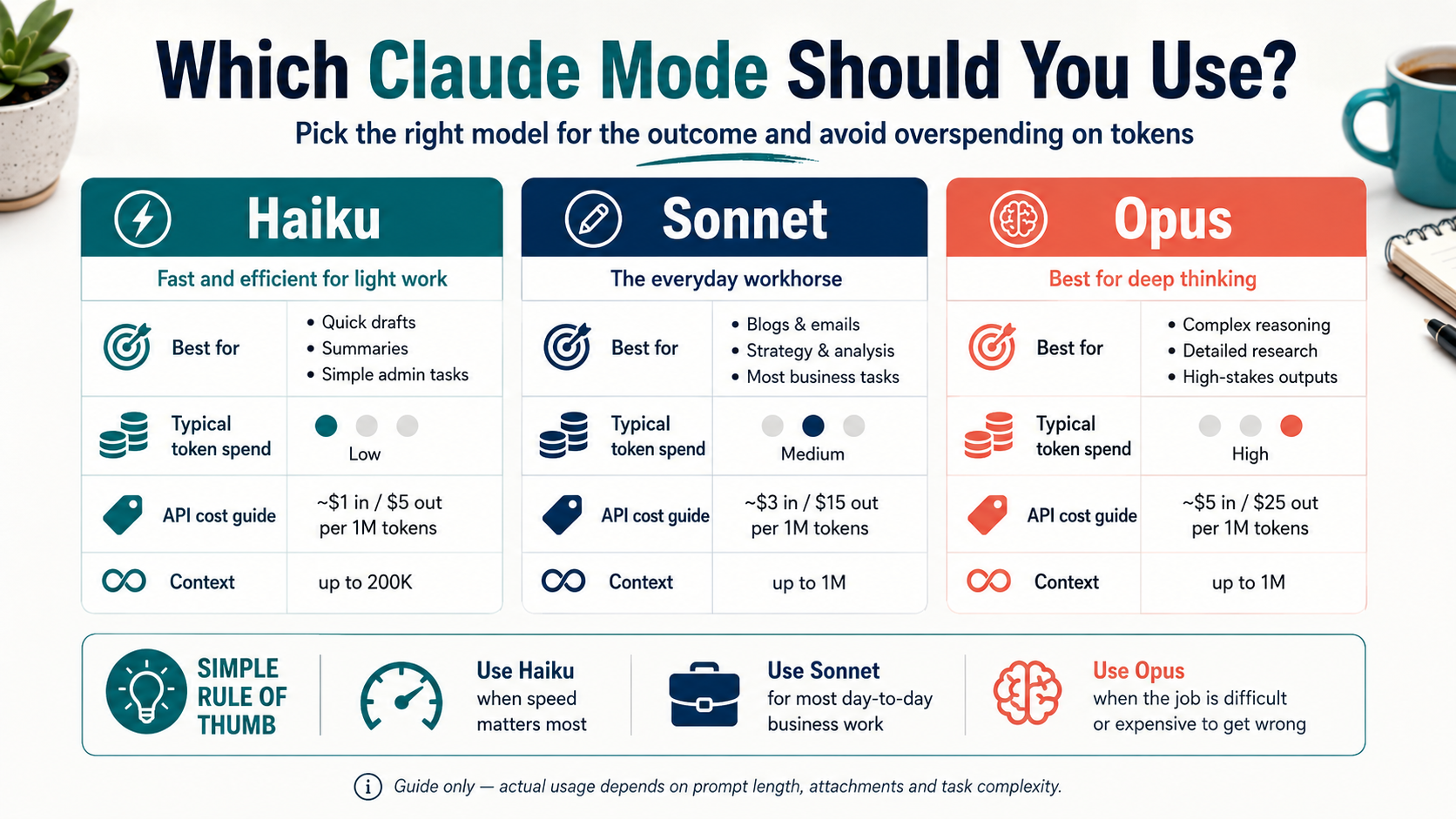
Choose the right model for your project or waste $$$
I asked Claude to generate a video script last week. It was good enough to work with, but not quite right. So I rewrote it. Then I had it rewrite it again. By the time I had something usable, I'd spent $30 in tokens and burned 45 minutes tinkering.
Here's the kicker: I didn't need to do that. I just didn't know a better way to ask.
Why Claude Gives You Rewrite-Ready Output
If you're using Claude and noticing outputs that need heavy editing—template phrases like "many small businesses," US examples when you need Australian ones, em dashes everywhere instead of commas—you're not getting bad AI. You're getting lazy prompts.
When you ask Claude vaguely (like "write me a video script"), it does what every AI does: it fills gaps with defaults. No geographic context? It picks US examples. No specific constraints? It uses common patterns it's learned—the same patterns every other person is using. That's why everything starts sounding like the same corporate blog post.
You end up rewriting. Burning tokens. Burning time.
The Fix: Tell Claude What You Actually Need
Claude isn't refusing to help. It's just waiting for better instructions.
Here's what I should have done instead:
Write a 90-second video script for an Australian small business owner who uses Canva.

Context: The business is a digital marketing consultancy in Melbourne. Their audience is Australian small business owners (5-50 people). They're introducing a new coaching program.

Rules:
- No "many small businesses" or "in today's world" filler
- Australian examples and Australian platforms only (not US tools or references)
- Use simple punctuation (commas, not em dashes)
- Open with a specific problem, not a generic hook
- Keep it conversational—like someone actually talking, not reading a memo

Deliverable: A script that's ready to record as-is. No rewriting.
See the difference? I told Claude what problem we're solving, who the audience is, what I don't want, and what ready means.
What You're Actually Paying For
A $30 token bill on something that needed reworking is expensive. But the real cost is time. 45 minutes of editing could've been spent on something that actually moves your business forward.
If you're generating 5-10 pieces of content a month and each one burns an extra $5-10 in rewrites, that's $50-100 in wasted tokens. More importantly, that's 5-10 hours you're not spending on strategy, sales, or the work that actually pays.
The Pattern to Watch For
If you're constantly:
Rewriting Claude outputs
Asking for "less corporate" versions
Telling it to use Australian examples after the fact
Removing filler phrases it keeps using
...you're not seeing a Claude problem. You're seeing a prompt problem.
One Simple Template (Copy-Paste This)
Use this structure for any content you need Claude to generate:
[What you want]: Video script / blog post / email / [other]
Who it's for: [Your audience + location]
What they care about: [Their actual problem or goal]
Context about your business: [What you do, how you're different]
What NOT to do:
Don't use [filler phrases you hate]
Don't reference [things that don't apply to your audience]
No [punctuation / formatting / tone thing you want to avoid]
How I'll know it's ready:
[One sentence describing ready-to-use output]
[Or: I'll record this as-is without editing]
That's it. Fill that in, paste it into Claude, and watch what changes.
This Is Just One Place You're Probably Wasting Time
The $30 video script? That's the symptom, not the disease.
If your prompt game is loose here, it's loose everywhere. Your email campaigns are probably getting rewrites. Your blog posts probably need editing. Your social posts might be generic. Your website copy might sound like every other business.
Every rewrite costs tokens. Every rewrite costs time. Every hour you spend editing is an hour you're not spending on sales, strategy, or actually running your business.
Most small business owners don't realise how much of their week disappears into fixing AI output that could've been right the first time.
What Changes in a Coaching Session
A single session with me isn't about learning prompt templates. It's about auditing your entire AI workflow and building a system that works for your business.
Here's what we typically cover:
Where you're actually wasting tokens (and it's usually more than one place)
Why your Claude outputs feel generic or off-brand
How to build prompts that include your business context so outputs are usable immediately
A repeatable system you can use for every piece of content you generate
How to scale AI into your workflow without it becoming a bottleneck
The financial return is real: most owners find they're saving $200-500 in monthly token waste alone, plus 5-10 hours of editing time they get back. That's not including the business growth that comes from actually having time to sell, plan, and build.
One session usually pays for itself in the first month.
Ready to Stop Wasting Time (and Money)?
Book an AI coaching session. We'll look at what you're doing now, find the gaps, and build a system that makes Claude actually work for your business instead of against it.
Your next step
Not sure where AI fits in your business yet?
Take the 2 minute AI Readiness Check. You get tailored next steps and a free resource based on your score.
Take the free check