Your Newest Marketing Co-Worker Doesn't Take Lunch Breaks
Most small business owners aren't losing to competitors with bigger budgets. They're losing to the calendar. Here's how treating Claude as a co-worker — not a chatbot — can hand you back a day a week.
The marketing workload isn't going away. Your time is.
If you're running a small business in Australia, you already know the pattern. Monday morning, you plan to write a newsletter, draft three social posts, update the website and finally get to that blog idea you've had since February. By Friday, two of those things are done. Maybe.
This isn't a discipline problem. It's a capacity problem.
Marketing today is a dozen small jobs — research, drafts, rewrites, captions, subject lines, alt text, proofs, scheduling — stacked on top of the actual work that pays the bills. Most small business owners aren't losing to competitors with bigger budgets. They're losing to the calendar.
That's where treating Claude as a co-worker — not a chatbot — changes the maths.
What "Claude as a co-worker" actually means
Most people use AI like a vending machine. Type a question, get an answer, move on.
Co-working is different. You give Claude the context it needs to do real work for your business: your voice, your offers, your audience, your past emails, and your style rules. Then you hand in the job, review the output, and ship it.
It stops being "let me try a ChatGPT prompt" and starts being "Claude, draft this week's newsletter using the last three that worked." The task moves from 45 minutes to 8.
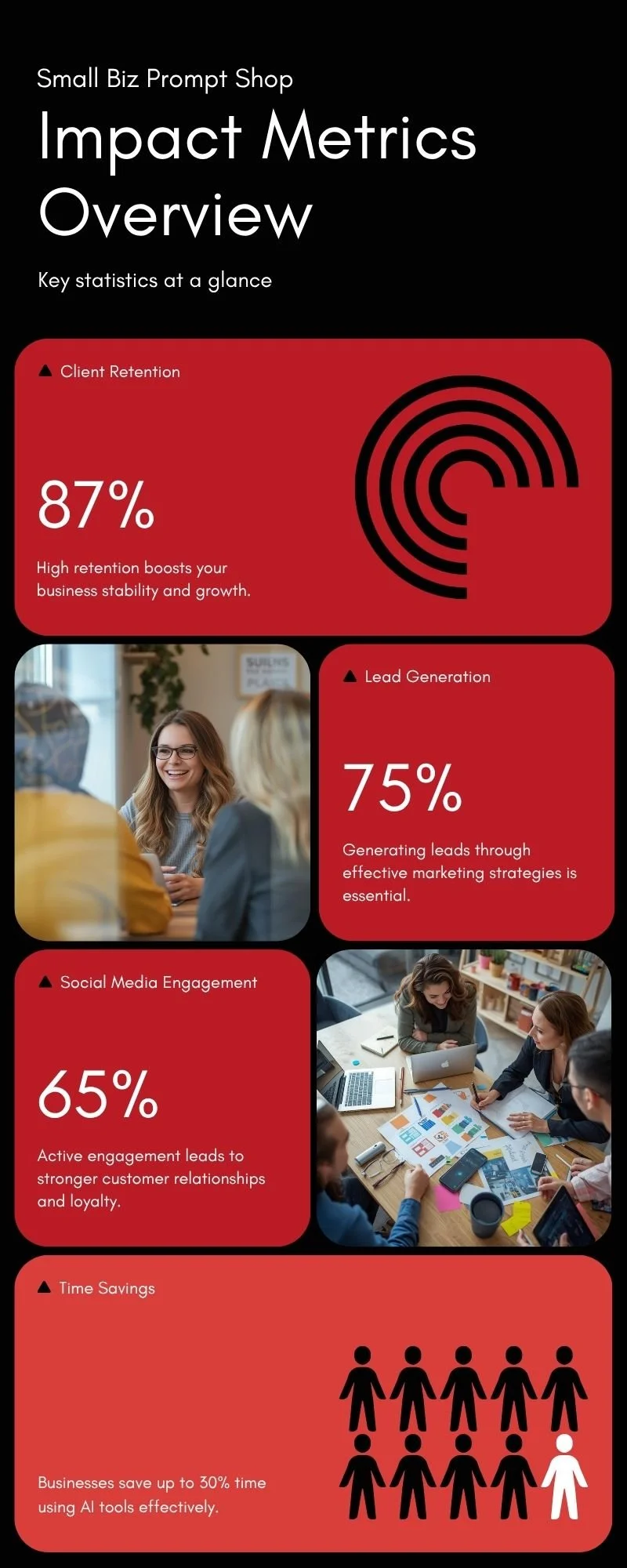
Do that across a dozen recurring marketing tasks and you've just bought back a day a week.
Five marketing tasks Claude can quietly take off your plate
1. Newsletter drafts. Feed Claude your last few newsletters, your brand voice, and the week's update. First drafts land in minutes, not hours. You edit for the bits only you can know.
2. Social posts from one piece of content. Wrote a blog? Claude turns it into a LinkedIn post, an Instagram caption, three story hooks and a follow-up comment thread — all in your voice.
3. Client follow-ups and proposals. Paste the discovery notes, brief Claude on tone, get a draft proposal or follow-up email you can personalise and send.
4. SEO and landing page copy. Claude can research competitors, draft page copy, suggest headlines, and rewrite for clarity. Not perfect. Fast.
5. Content calendars. Give Claude your launches, events, and evergreen themes. Get back a month of post ideas mapped to platform, with hooks already written.
None of these replaces your judgment. All of them remove the blank page.
The shift that makes this stick: from prompting to systems
Here's where most small business owners get stuck. They watch a tutorial, write a clever prompt, get an amazing result — then can't remember what they did next week, and the workflow falls apart.
The magic isn't in one prompt. It's in building a repeatable system: a prompt library that knows your business, documented workflows for recurring tasks, and a tool stack you actually use.
A system looks like:
- A newsletter workflow that references your voice guide, offers and past issues
- A social post generator you feed a blog link into
- A client onboarding flow that writes the welcome email, schedules the call and drafts the kickoff brief
Built once, used weekly. That's what turns "AI as novelty" into "AI as hours back on the calendar."
What this looks like in practice
I work with small business owners every week who tell me some version of the same thing:
"I know AI can help me. I've tried ChatGPT. I just don't have a real system behind it."
That's exactly the gap the AI Build Session is designed to close.
It's a focused 60-minute working session where we identify one real AI workflow, tool or system for your business — and build it together. You don't leave with theory or a tab full of YouTube videos. You leave with a tangible asset: a prompt starter library, a documented workflow, or a scoped build plan you can hand to someone to implement.
Not a workshop. Not another course. A working session. You book a time, we find the right problem, we design the solution, you walk out with something you can use on Monday.
The session is $275 AUD, and the fee is credited toward any larger build project we do after. So if the session turns into a full implementation, you're not paying twice.
Stop experimenting. Start building.
Every week you spend bolting AI onto your marketing with one-off prompts is a week you could have spent running a system that runs itself.
If you're ready to turn Claude into an actual member of your marketing team — one that remembers your voice, runs on repeat, and gives you back the hours you've been losing to the calendar — book your AI Build Session here.
You'll walk out with one real thing built for your business. And a system you can keep growing from there.
---
Small Biz Prompt Shop helps Australian small business owners turn AI from a novelty into a working part of the team.
Your next step
Not sure where AI fits in your business yet?
Take the 2 minute AI Readiness Check. You get tailored next steps and a free resource based on your score.
Take the free check