I Built an AI-Powered App to Solve a Real Problem — Here's Exactly How
The problem with how most people use AI
Most small business owners I talk to use AI the same way: ask it a question, get an answer, close the tab. That's fine — but it's using maybe 10% of what's actually available to you right now, today, with no coding background.
So instead of another "5 ChatGPT prompts for small business" post, I built something real: Right Rose, Right Spot — a tool that asks home gardeners a few questions and recommends rose varieties that will actually survive in their climate, sun, and space.
Why a rose finder
A rose that thrives in subtropical Queensland will sulk and die in cool-climate Tasmania — and almost nobody selling roses tells you that clearly before you buy. It's the same shape of problem every small business has somewhere in their funnel: a decision the customer is unequipped to make well, that you're equipped to make well for them.
The actual lesson: the best AI tool you can build isn't the impressive one — it's the one that answers the specific question your customer is stuck on.
SCREENSHOT
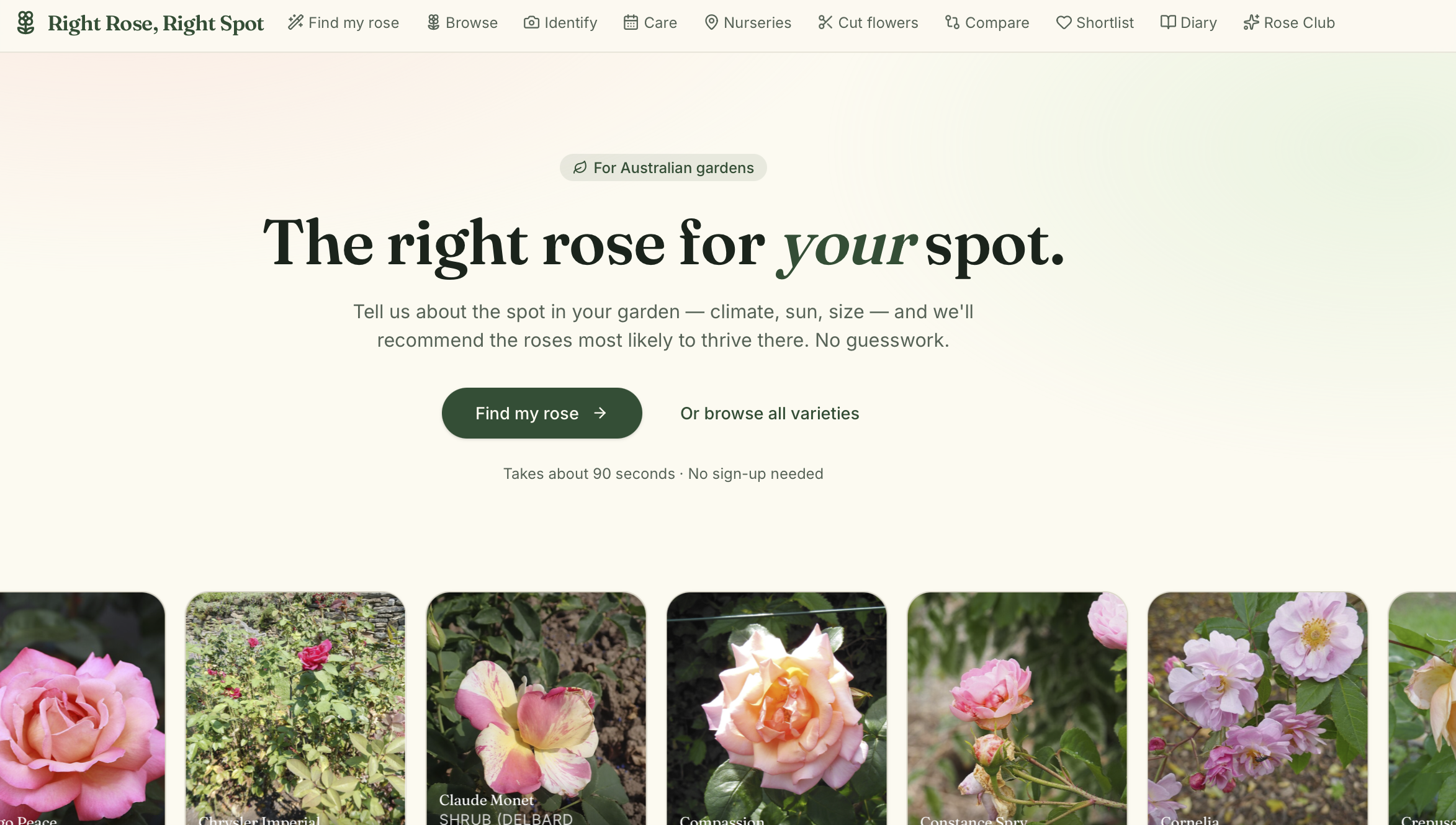
Home page screenshot
How it actually got built
I used Lovable — a no-code AI app builder — directed with plain-English instructions, the same structured prompting approach taught inside SBPS:
Described the core outcome first: "a gardener answers a few questions and gets rose varieties matched to their conditions."
Built the question flow before touching any visual design — logic before polish.
Iterated on the matching logic in plain language, not code.
Styled it only once the mechanic worked end to end.
That order matters more than people expect. Most business owners try to make the AI build something that looks finished on the first prompt. It works far better to get the logic right first, ugly, then make it look good.
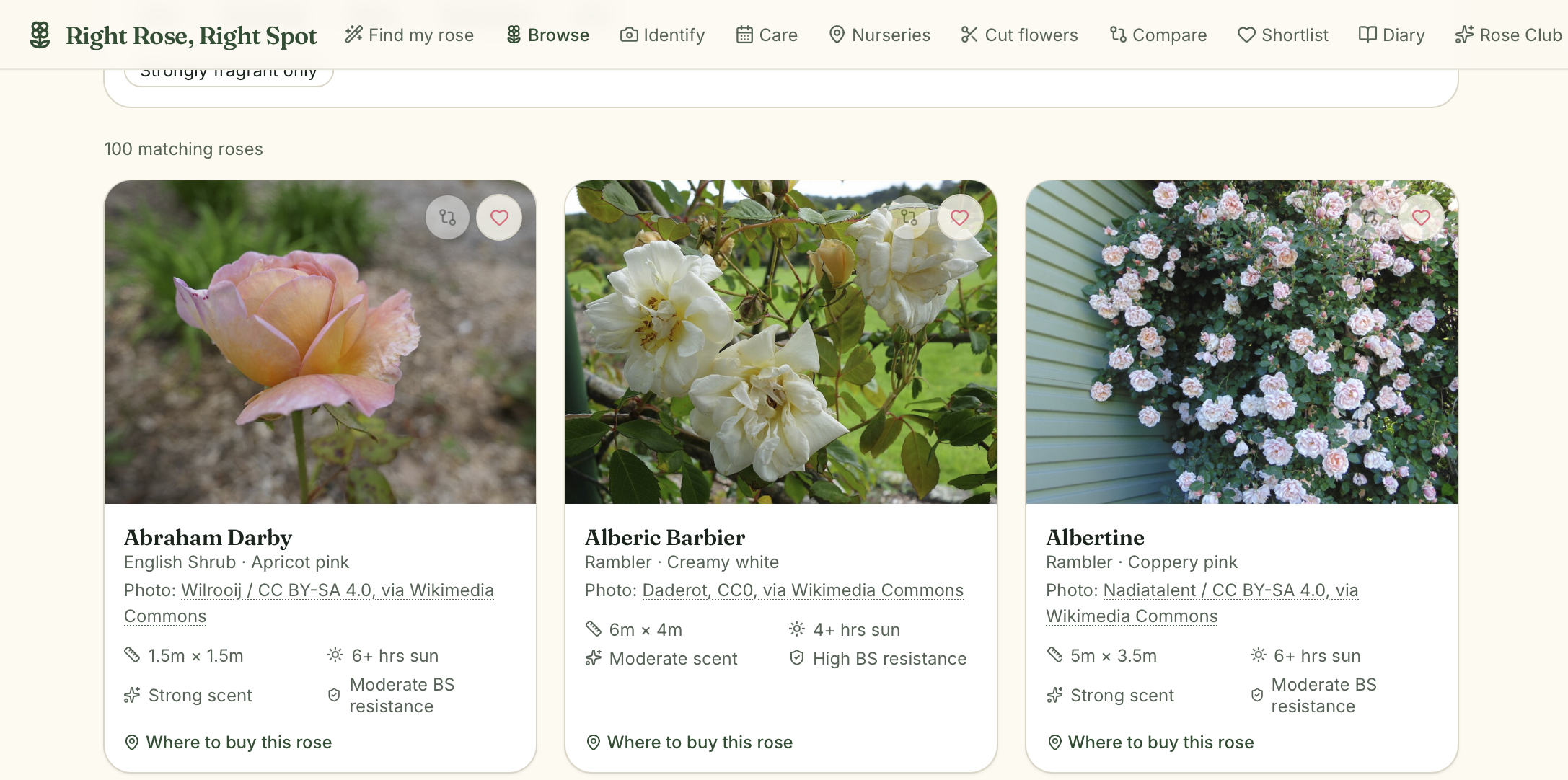
Comparing roses
What this proves for your business
You don't need to build a rose app. You need to find the one decision your customers are stuck on — the thing they'd ask a knowledgeable friend rather than Google — and build something, even something small, that answers it well.
That's the whole gap between "I use ChatGPT sometimes" and "I built a tool that does real work for my business." It's not a skills gap — it's a prompting and structuring gap, and it's learnable.
Your next step
Not sure where AI fits in your business yet?
Take the 2 minute AI Readiness Check. You get tailored next steps and a free resource based on your score.
Take the free check